
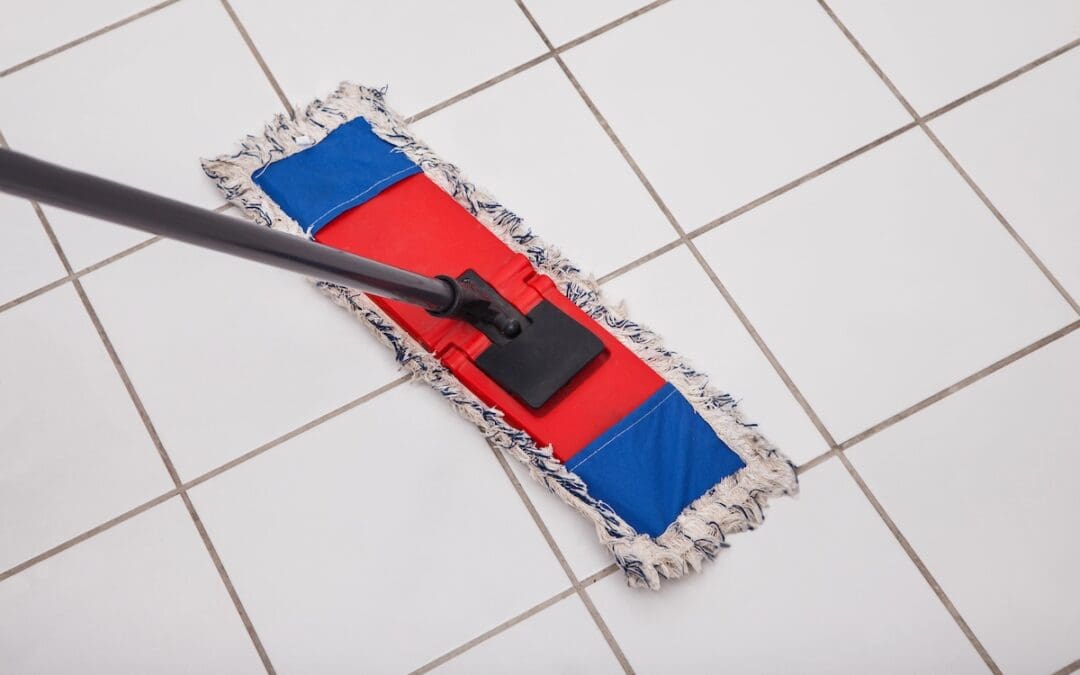
Cleaning tile floors is one of those tasks that most homeowners do regularly but rarely do as effectively as they could. The challenge in cleaning tile is almost always the grout: the porous, cement-based material between the tiles that absorbs dirt, moisture, and residue over time and is responsible for the dingy appearance that makes even well-maintained tile look neglected. Understanding the difference between cleaning the tile and cleaning the grout, and approaching each correctly, is what produces floors that actually look clean rather than just mopped.
Cleaning Tile Surfaces the Right Way
The most common mistake in cleaning tile floors is using the wrong type or amount of water. Tile tolerates moisture well, but excessive water sitting in grout lines and penetrating to the subfloor accelerates grout deterioration over time. Damp mopping with a well-wrung mop is the correct approach for routine cleaning tile maintenance. Cleaning products matter significantly. Avoid acidic cleaners, including vinegar, which is frequently recommended as a natural solution, on tile with grout. Acidic products etch cement-based grout over time, gradually breaking down its structure and making it more porous and harder to clean. pH-neutral tile cleaners are the appropriate choice for routine maintenance and are available at any hardware or grocery store.
Steam mops are highly effective for cleaning and better than traditional mops for grout lines, the steam penetrates the porous grout surface and releases embedded dirt more effectively than water and detergent alone.
Cleaning Tile Grout: The Step That Makes the Biggest Difference
For grout that has accumulated visible staining or discoloration, a targeted grout cleaning treatment is the step that produces the most visible improvement. A paste of baking soda and water applied to the grout line and scrubbed with a stiff-bristled grout brush, a narrow brush designed specifically for this purpose, lifts embedded dirt through mild abrasion without damaging the grout surface. For heavier staining, an oxygen-based cleaner applied to wet grout and allowed to dwell for ten to fifteen minutes before scrubbing is significantly more effective than mechanical scrubbing alone. The dwell time allows the oxidizing agents in the cleaner to break down the staining compounds chemically before the brush even makes contact, which produces noticeably better results with less physical effort.
Protecting Tile With Grout Sealer
After any deep cleaning session, particularly one that involved grout cleaning, applying a penetrating grout sealer is the step that protects the results. Grout sealer fills the microscopic pores in the grout surface with a water-resistant compound that makes future staining significantly harder and future cleaning tile considerably easier. Sealer application is straightforward: the grout must be fully dry, the sealer is applied with a small applicator brush or roller directly to the grout lines, allowed to penetrate for the manufacturer’s recommended dwell time, and excess is wiped from the tile surface before it cures. Most residential grout benefits from resealing every one to two years, and tile floors that are sealed consistently look meaningfully better over time than those that aren’t.
Right Choice Home Inspection provides pool inspection services in Austin and the surrounding area. Contact us today to schedule an inspection.