
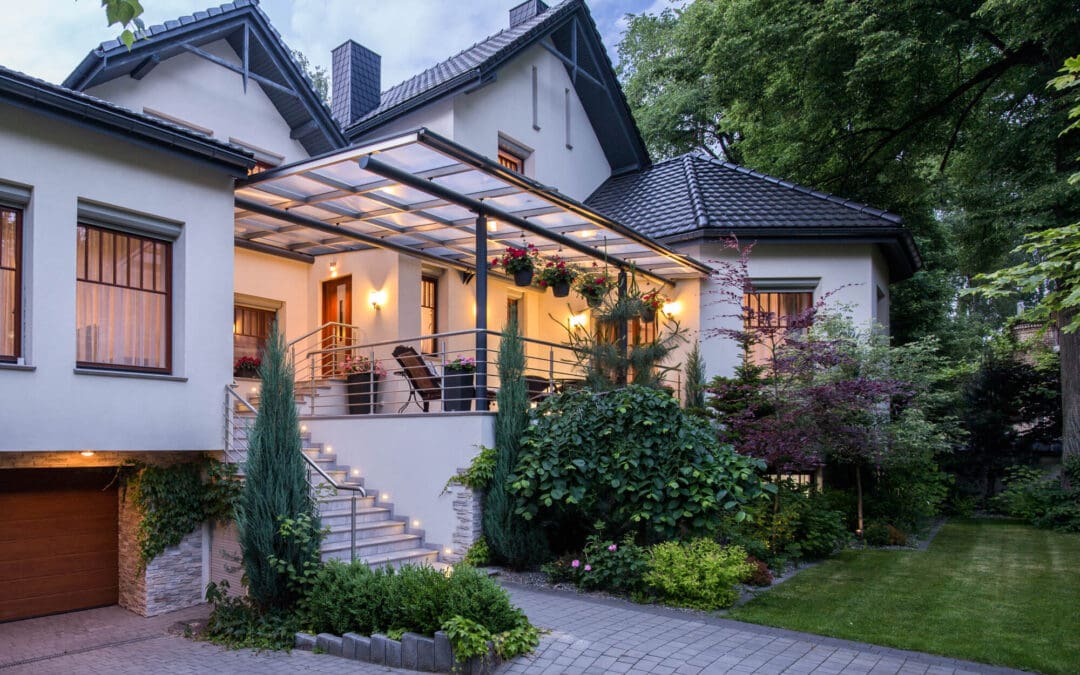
Exterior lighting is one of those home systems that most homeowners set up once and never revisit, which means the fixtures, bulbs, and controls installed years ago are often still doing the same job they were doing then, at the same energy cost, with the same limitations. Improving exterior lighting makes what’s already there work smarter, consuming less energy, responding more intelligently to actual conditions, and providing better coverage without the waste that comes from lights burning continuously whether anyone needs them or not.
Smarter Exterior Lighting Starts With the Right Technology
If any exterior lighting fixture on the property still uses incandescent or halogen bulbs, replacing them with LED equivalents is the single most impactful change available, and one that pays for itself quickly. LED lighting uses 75 to 80 percent less energy than incandescent equivalents, lasts 15 to 25 times longer, and performs better in cold temperatures than many other bulb types. For exterior lighting that runs several hours nightly, the energy savings compound significantly over a full year. Color temperature matters outdoors just as it does indoors, warm white at 2700K to 3000K suits entry and landscape lighting for a welcoming appearance, while neutral or cool white suits security-focused fixture positions where visibility is the priority over atmosphere.
Motion Sensors and Timers Transform How Lighting Performs
Fixed-on exterior lighting burns energy continuously whether anyone is present, approaching, or in any way benefiting from the light it produces. Motion-activated lighting delivers the same deterrence and safety benefit as continuous lighting but uses a fraction of the energy by operating only when triggered. The combination of an LED bulb and a motion sensor in an exterior fixture produces the greatest available efficiency, bright, reliable light on demand rather than on schedule.
Timer controls and smart lighting systems add a layer of precision that manual switches and basic motion sensors don’t provide. A smart exterior lighting setup, managed through a home automation app or smart hub, allows scheduling based on sunset and sunrise rather than fixed times, remote on/off control, and integration with other smart home systems. Lights that adjust automatically to seasonal daylight changes without manual schedule resets are a convenience that also prevents the common situation of lights running well past the hours when they’re needed.
Zoning and Placement: Getting More From Existing Exterior Lighting
Poorly placed exterior lighting creates dark zones, glare, and wasted light output directed toward the sky rather than the surfaces that benefit from illumination. Reviewing the coverage of existing exterior lighting, specifically identifying areas that are over-lit, under-lit, or lit in ways that create glare rather than useful light, often reveals that the existing fixtures, repositioned or redirected, can produce better coverage without adding any new fixtures. Pathway lighting that directs light downward rather than outward, spotlights aimed specifically at the surfaces they’re intended to illuminate rather than diffusing light generally, and fixture positioning that eliminates direct-line-of-sight glare from windows and entry points all improve the quality and efficiency of existing exterior lighting without new installation costs.
Right Choice Home Inspection provides home inspection services in Austin and the surrounding area. Contact us today to schedule an inspection.